rj45 vs rj11
rj45 vs rj11
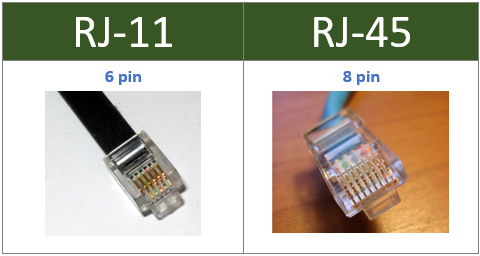
The eight-pin RJ45 connector is a standardised interface which often connects a computer to a Local Area Network (LAN). This type of connector was originally developed for telephone communications but is now used in a range of applications. The abbreviation, RJ45, stands for Registered Jack-45.
An RJ11 (Registered Jack-11) is a standardized telecommunication connector used for analog data transmission, typically analog voice signals for landline telephones. If a network is really old, it might also be used
on fax machines, scanners, and other network devices. In layman's terms, this is a telephone jack.
- RJ45 Overview
- Eight-pin configuration.
- Standardized connector for Ethernet connections.
- Versatile application in homes, offices, and data centers.
- Supports high-speed data transfer.
- Ideal for connecting computers, routers, and various network devices.
- RJ11 Overview:
- Four-pin design.
- Standardized connector for telephone connections.
- Commonly used in households.
- Suitable for landline phones and some older DSL internet connections.
- Primarily designed for voice communication.
- Differences:
- Functionality RJ45 excels in high-speed data transfer for modern networking, while RJ11 is geared towards traditional voice communication.
- Applications: RJ45 is widely used for video streaming, online gaming, and connecting data-centric devices. In contrast, RJ11 is commonly found in landline phones and older DSL connections.
- Bandwidth: RJ45 offers higher bandwidth capabilities compared to RJ11, making it more suitable for data-intensive tasks.
- Conclusion:
- Understanding the disparities between RJ45 and RJ11 is crucial.
- RJ45 dominates in data-driven applications, providing robust and reliable connections.
- RJ11 remains a reliable choice for voice communication but lacks the bandwidth for modern networking demands.

Comments
Post a Comment